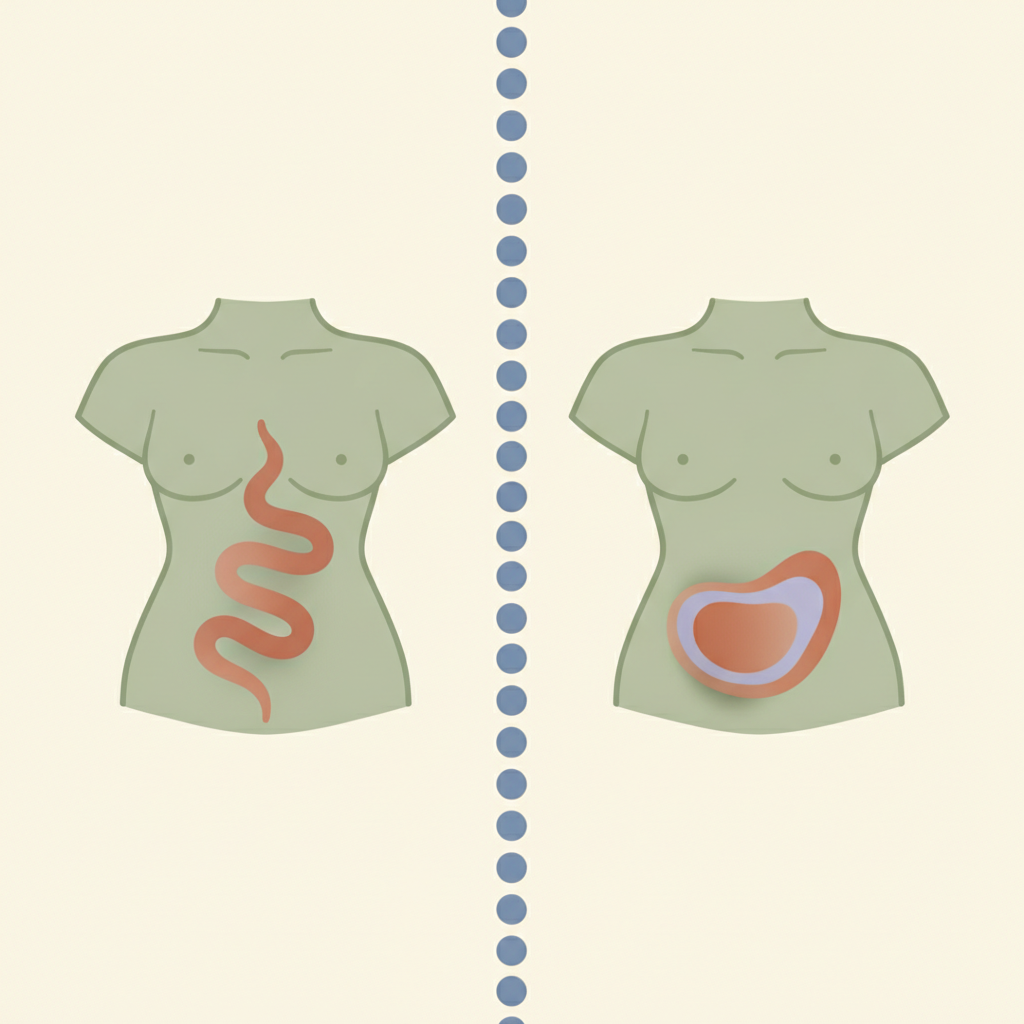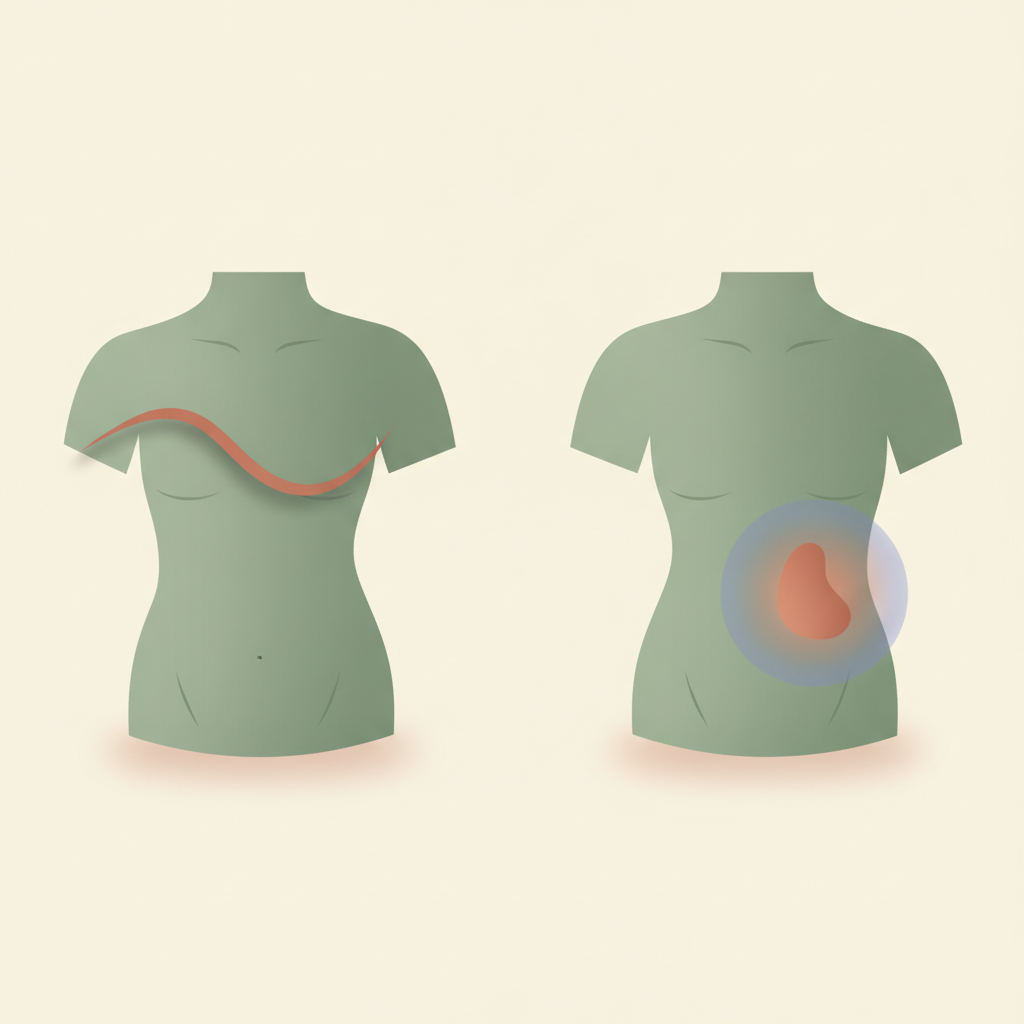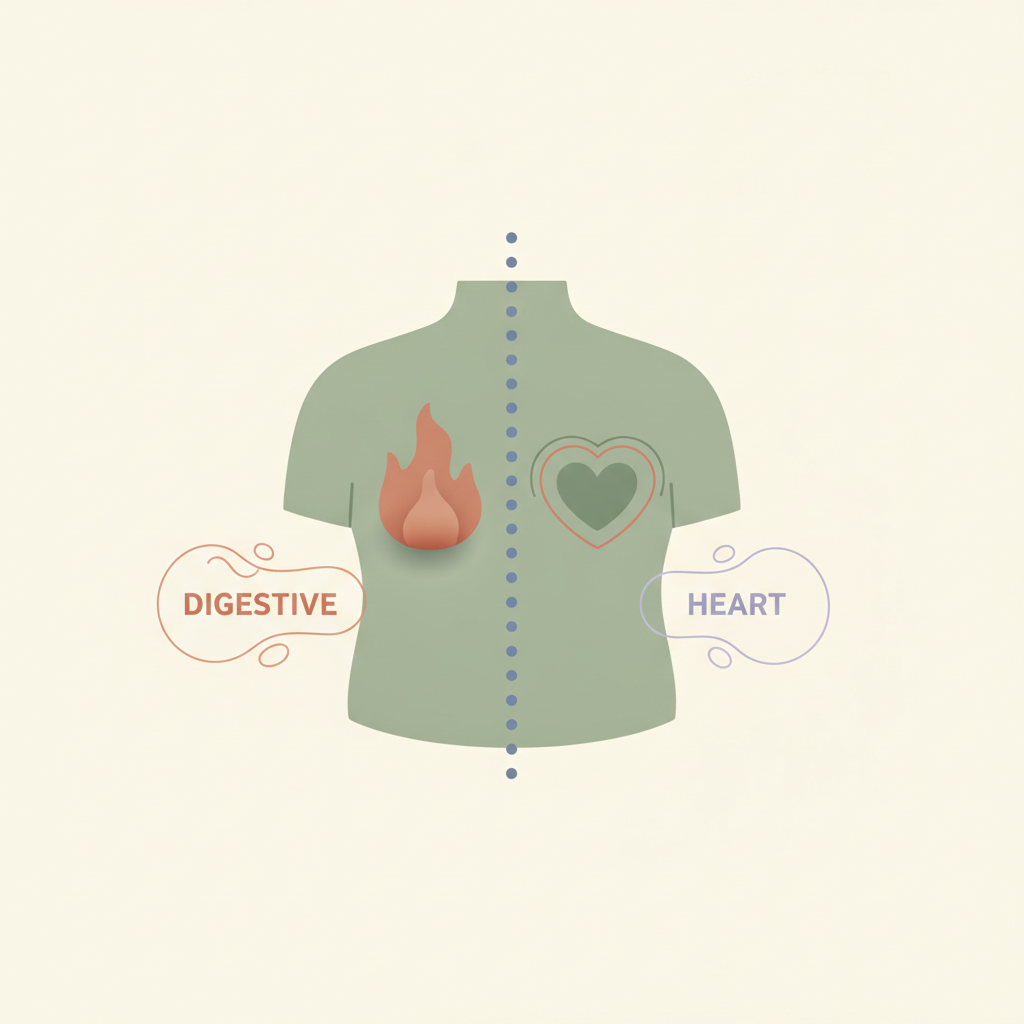
Acid reflux and a stomach (or duodenal) ulcer can both cause upper abdominal discomfort, but they involve different locations and mechanisms, and ulcers carry some distinct warning signs worth knowing.
Location and timing differences
Reflux tends to cause burning higher up, behind the breastbone, often related to meals or lying down. An ulcer typically causes pain more centered in the upper stomach, and the timing relative to meals can actually point toward which type: pain that improves with eating and returns a couple of hours later is more classically associated with a duodenal ulcer, while pain that worsens with eating is more typical of a stomach ulcer.
Ulcer-specific warning signs
Vomiting blood or material resembling coffee grounds, black or tarry stools, and unexplained weight loss are more specifically associated with ulcers (particularly bleeding ulcers) and warrant urgent medical attention rather than home management.
Why the distinction matters for treatment
Ulcers often involve a specific cause — H. pylori infection or long-term NSAID use — that needs its own targeted treatment (antibiotics for H. pylori, stopping or adjusting NSAID use) beyond the standard reflux approach. If typical reflux treatment isn't resolving your symptoms, or if any of the warning signs above are present, that's a reason to see a doctor rather than continuing self-treatment for reflux.