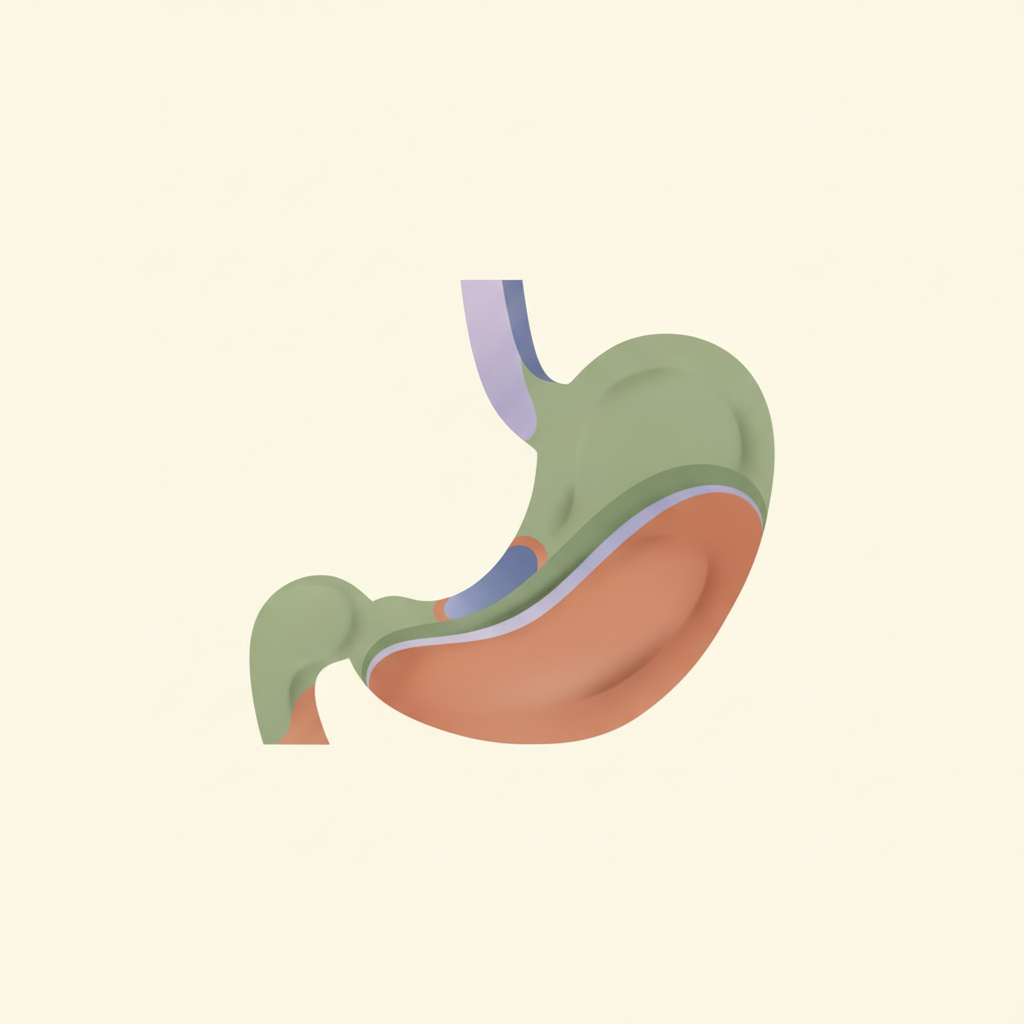

Between medication and full surgery, there are several less invasive procedural options worth knowing about, each with different levels of invasiveness and evidence behind them.
Endoscopic procedures
Beyond the TIF procedure covered elsewhere, other endoscopic approaches (performed through the mouth without external incisions) aim to tighten or reinforce the lower esophageal sphincter using techniques like suturing or radiofrequency energy applied to the tissue. These are generally considered for people with milder reflux who want an alternative to both long-term medication and full surgery, though patient selection and long-term outcome data vary by specific technique.
Radiofrequency treatment (Stretta procedure)
This approach delivers controlled radiofrequency energy to the lower esophageal sphincter area during an endoscopic procedure, which is thought to improve the muscle's barrier function over time, potentially through both a direct tightening effect and changes in how sensitive the area is to reflux. It's generally considered a lower-risk option, though the strength of the evidence for its effectiveness is somewhat more mixed compared to surgical approaches.
How these options compare to full surgery
These less invasive procedures generally involve less recovery time and lower risk than fundoplication or LINX placement, but the trade-off is often somewhat less predictable or durable symptom improvement, particularly for more severe reflux or a significant hiatal hernia, which these approaches are less equipped to address compared to a full surgical repair.