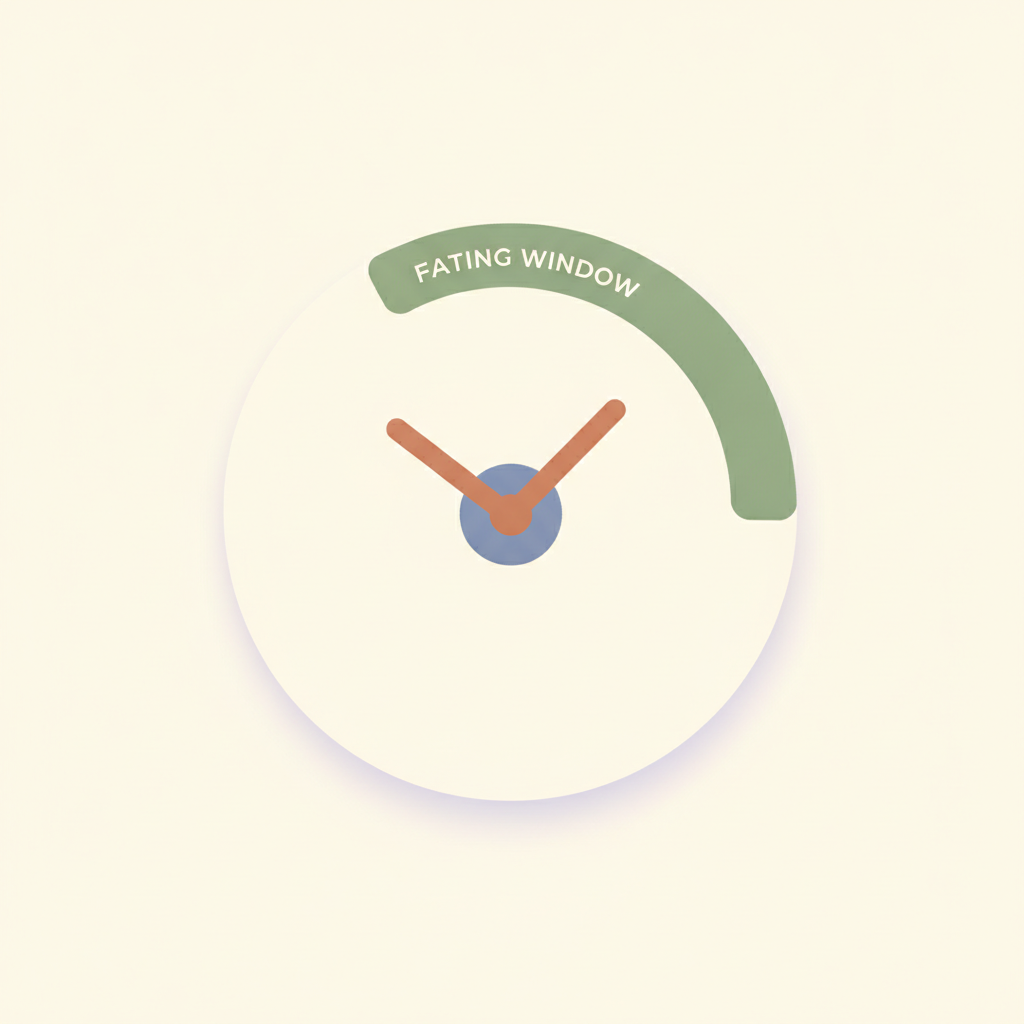
Intermittent fasting affects reflux in two opposite directions, which is why people report such different experiences with it. An empty stomach for part of the day can mean less volume available to reflux — some people notice real improvement. But breaking a longer fast with a large meal can overload a stomach that's had nothing in it for hours, and going to bed still digesting that meal is a common recipe for nighttime symptoms.
What tends to go wrong
The most frequent mistake isn't the fasting window itself — it's how the eating window is used. A single large meal, eaten quickly because of hunger, with rich or fatty food, recreates several reflux triggers at once (large portion, fast eating, high fat) inside a compressed period.
A gentler way to try it
Breaking a fast with something smaller and blander — a bit of oatmeal or a light protein — rather than diving straight into the biggest meal of the day, and spacing two smaller meals within the eating window instead of one large one, tends to reduce the rebound effect. Timing the eating window earlier, so the last meal isn't close to bedtime, matters more for reflux than the specific fasting protocol chosen.
If reflux is frequent or severe, it's worth discussing any fasting plan with a doctor before starting, since individual response varies widely.