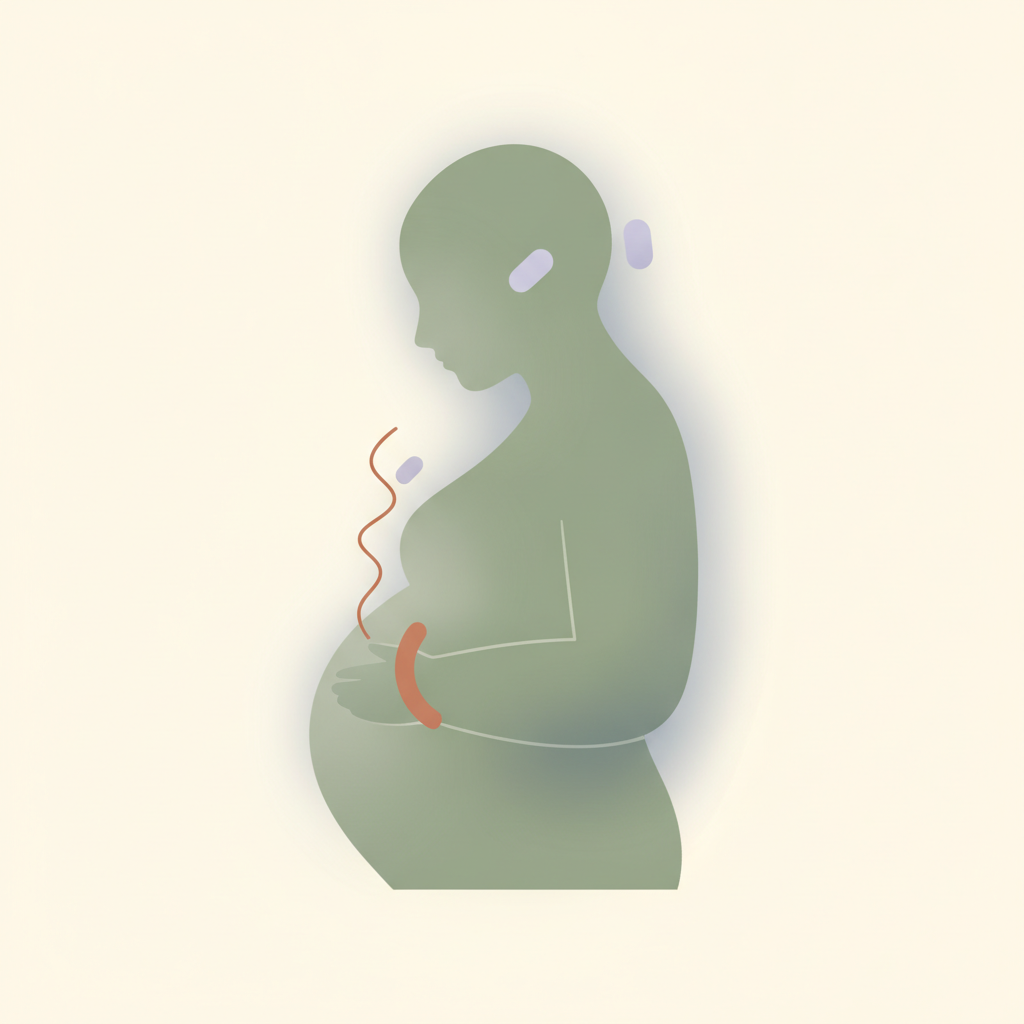
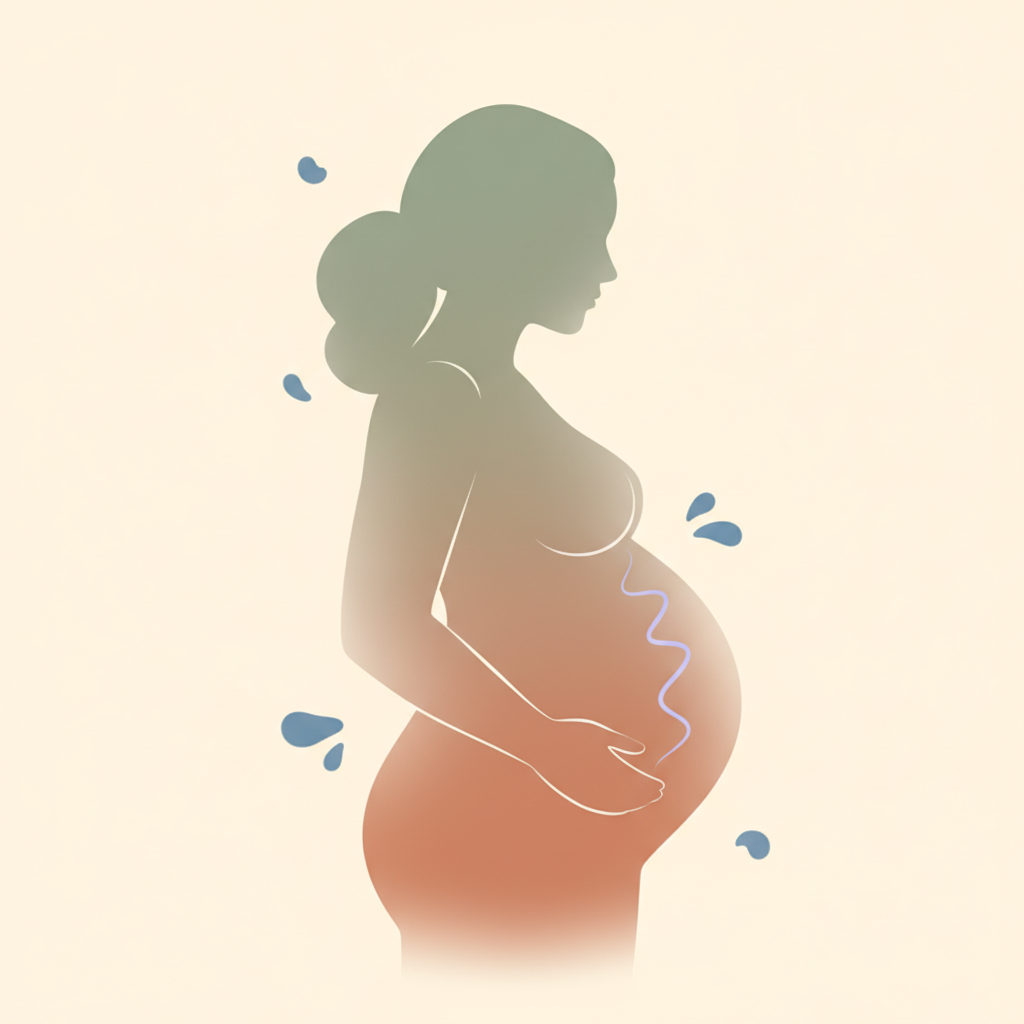
Reflux frequently intensifies in the third trimester, and the reasons are mostly mechanical: the growing uterus takes up more abdominal space, pushing directly against the stomach and increasing pressure on the lower esophageal sphincter.
Why the third trimester specifically
By this stage, the uterus has grown enough to meaningfully compress the stomach, on top of the pregnancy hormone progesterone, which relaxes smooth muscle throughout the body, including the LES, from earlier in pregnancy onward. The combination of hormonal relaxation and increasing mechanical pressure is why symptoms often peak in these final months.
Adjustments that help most during this stage
Smaller, more frequent meals become even more important as the stomach has less room to comfortably hold a large meal. Sleeping propped up with extra pillows or a wedge, and avoiding lying flat especially after eating, tend to make a noticeable difference. Loose-fitting clothing around the abdomen can also reduce additional pressure.
What tends to improve after delivery
Most women find reflux symptoms improve significantly or resolve within days to weeks after giving birth, once the mechanical pressure from the uterus is gone, though hormone levels take longer to fully normalize and some residual symptoms can persist briefly during that adjustment period.