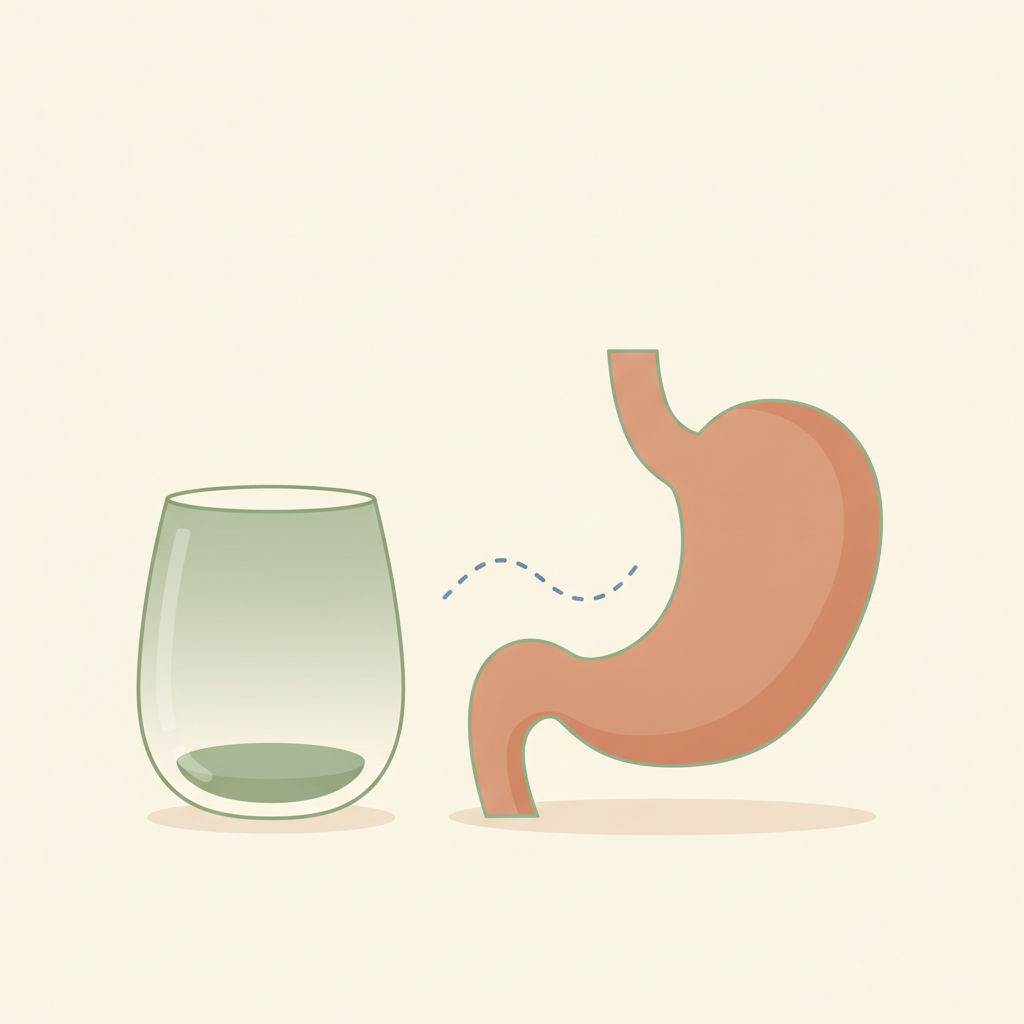
Dehydration isn't a primary cause of reflux, but it can make existing reflux feel worse and interfere with some of the body's natural defenses against it.
The connection
Saliva production, which helps neutralize and wash acid from the esophagus, depends on adequate hydration — a dehydrated body produces less saliva, reducing one of the natural mechanisms that limits reflux discomfort. Dehydration can also thicken stomach acid and slow digestion slightly, both of which can make reflux symptoms feel more pronounced.
A practical takeaway
Staying adequately hydrated throughout the day, rather than drinking large amounts at once (which can add to stomach volume and pressure), supports the body's own reflux defenses without adding the volume-related risk that gulping large amounts of water can bring.
Worth noting
This is a supporting factor, not a primary driver — proper hydration won't resolve reflux caused by a weak LES or a hiatal hernia on its own, but it removes one variable that can make symptoms feel worse than they need to.