Both approaches aim at the same goal — keeping the upper body above stomach level overnight — but they're not equally effective, and the difference comes down to what part of the body actually gets elevated.
Why bed elevation tends to work better
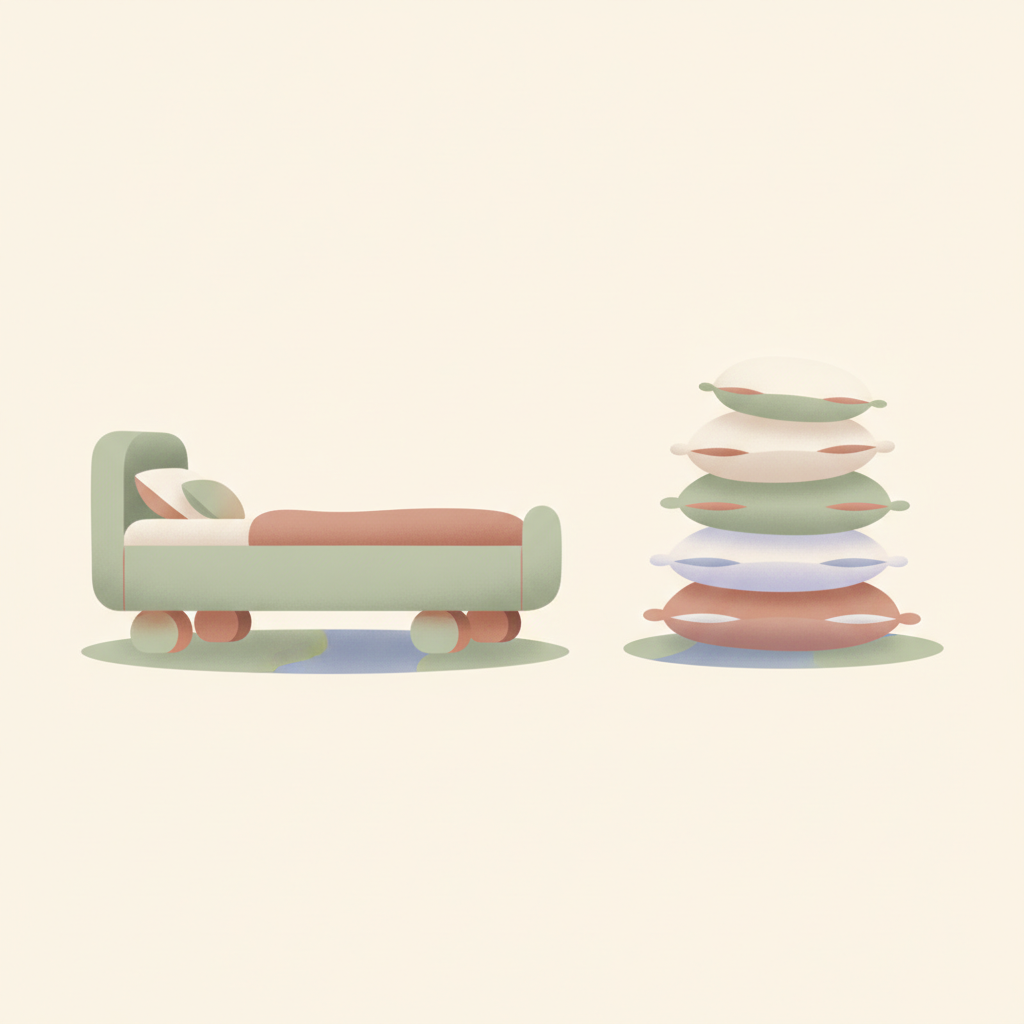
Raising the head of the bed itself (with bed risers, an adjustable base, or blocks under the bed frame) elevates the entire upper body at a consistent angle throughout the night, including while you shift positions in your sleep. This keeps the whole torso above stomach level regardless of how you're lying.
Where pillow stacking falls short
Extra pillows under just the head and neck often bend the body at the waist rather than raising the whole torso — this can actually increase abdominal pressure and work against the goal. A wedge pillow that supports the back and shoulders (not just the head) is a better middle option than stacking regular pillows, though it's still generally considered less effective than raising the bed frame itself.
A practical starting point
Elevating the head of the bed by six to eight inches is the range most commonly recommended. If a permanent bed modification isn't practical, a solid foam wedge designed for reflux (rather than soft regular pillows) is the next-best option.