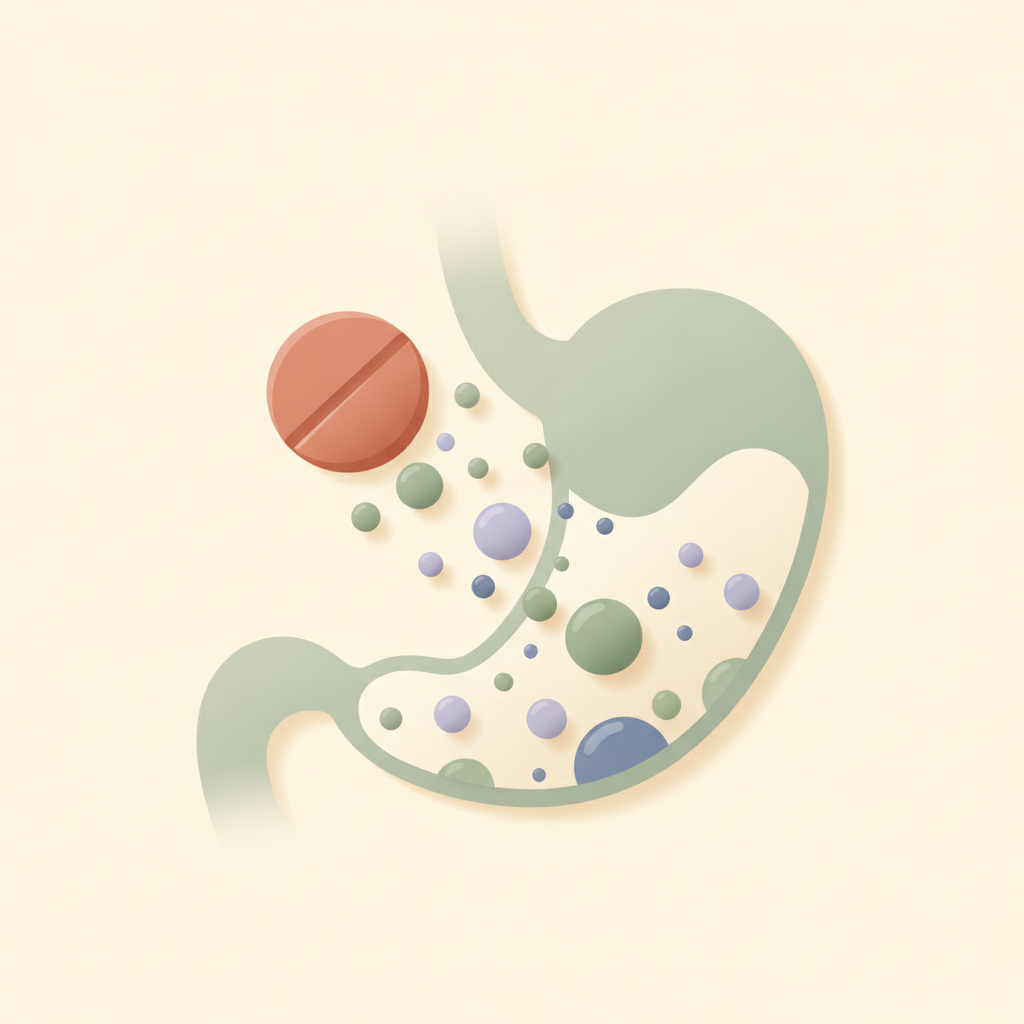
Both H2 blockers (like famotidine) and PPIs reduce stomach acid, but they work on different parts of the process and at different strengths. H2 blockers block histamine receptors that signal acid-producing cells to activate, reducing acid production by roughly 70%; they start working within an hour and last several hours, making them useful for both routine use and faster relief than a PPI provides. PPIs block the acid-producing pumps directly, reducing production more completely (often 90%+), but take 1–4 days to reach full effect and are meant for daily, sustained use rather than as-needed relief. In practice, many people use H2 blockers for milder or occasional symptoms, or for faster relief alongside a PPI, while PPIs are typically reserved for more frequent or severe reflux, including diagnosed GERD or esophagitis, where more complete acid suppression supports healing.