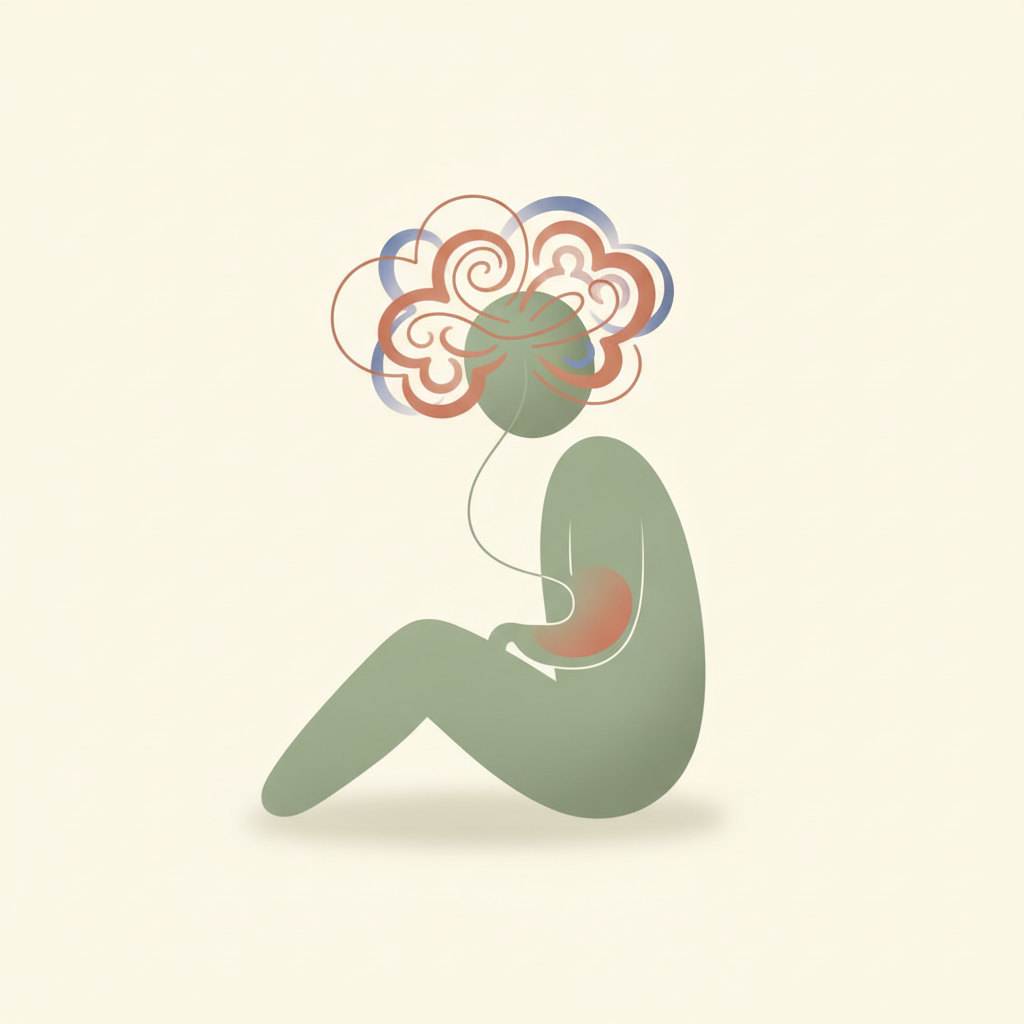
Stress doesn't produce stomach acid on its own, and it doesn't damage the LES the way certain foods or a hiatal hernia can. But people under stress reliably report more reflux symptoms, and that's not imagination — the connection is real, just indirect.
What stress actually changes
Stress affects reflux through a few separate paths rather than one direct mechanism:
- Pain sensitivity increases. Research on functional gut disorders shows that stress lowers the threshold at which the esophagus registers acid as painful. The same amount of reflux can feel considerably worse during a stressful period than a calm one.
- Behavior changes. Under stress, people tend to eat faster, eat more, skip meals and then overeat later, drink more caffeine or alcohol, and sleep less — all of which independently make reflux more likely.
- Digestion slows down. The body's stress response diverts resources away from digestion, which can mean food sits in the stomach longer, increasing the window for reflux.
- Muscle tension. Some people tense their abdominal and diaphragm muscles under stress, which can increase pressure on the stomach.
Why this matters for treatment
If stress were the direct cause of reflux, reducing stress alone would be expected to resolve it. In practice, stress management helps some people meaningfully and does little for others — because it's addressing amplifying factors, not the underlying mechanism (usually a weak LES, hiatal hernia, or delayed stomach emptying).
That said, for people whose symptoms clearly track with stressful periods, a few approaches are worth trying alongside the usual diet and sleep changes:
- Regular, moderate exercise (not immediately after eating)
- Consistent meal timing, even when busy
- Basic sleep hygiene, since poor sleep and stress feed each other
- Slower eating, which reduces air swallowing and overeating
- Breathing or relaxation techniques before meals, for those who tense up while eating
The honest takeaway
Stress is a real amplifier of reflux symptoms, not a root cause in most people. Managing it is worth doing for its own sake and can meaningfully reduce how bad symptoms feel — but if reflux is frequent regardless of stress levels, the more useful next step is looking at diet, sleep position, and meal timing, or talking to a doctor about what's driving it.