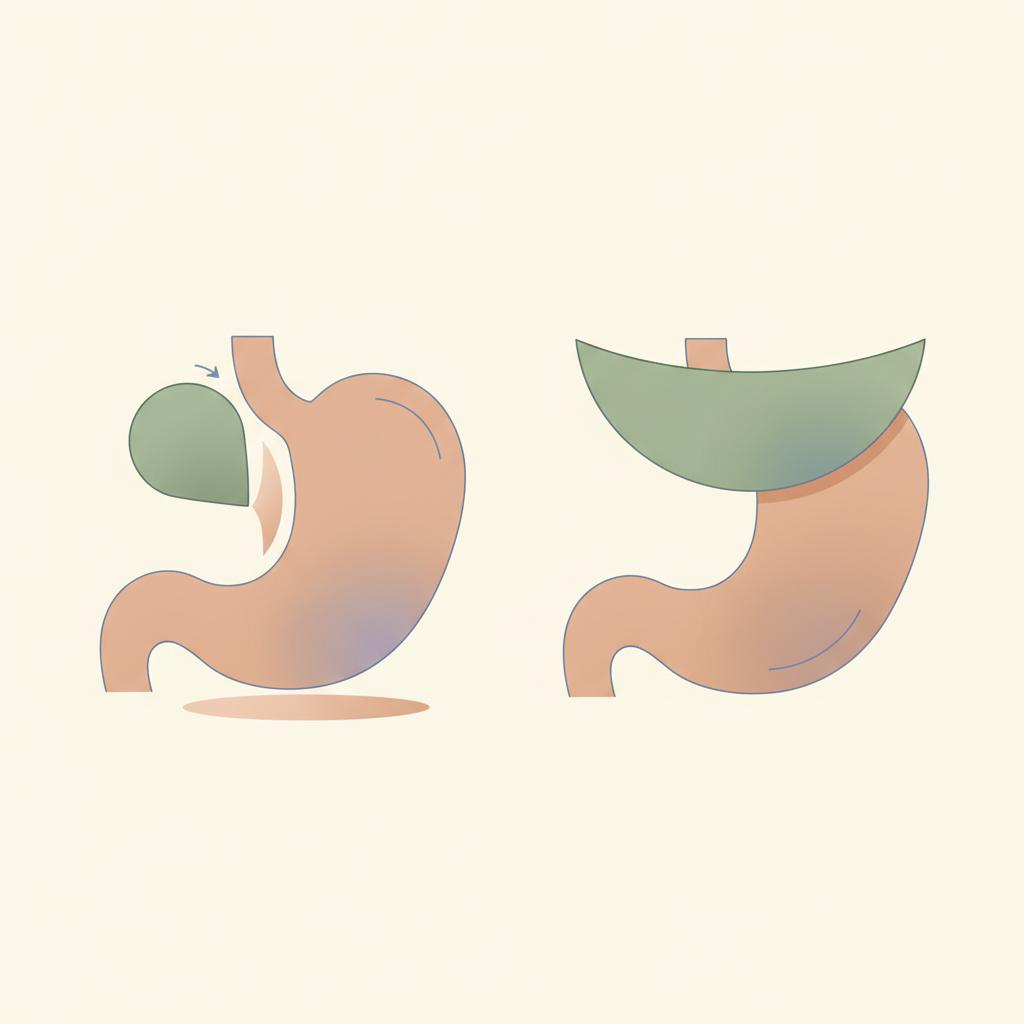
Hiatal hernias come in two main types, and the distinction matters for both symptoms and how seriously each is typically treated.
Sliding hiatal hernia
This is the more common type, where the junction between the stomach and esophagus slides up through the diaphragm, particularly when lying down or bending over, and slides back down in other positions. It's closely associated with reflux symptoms — heartburn, regurgitation, a sour taste — since the sliding disrupts the normal anti-reflux barrier at that junction.
Paraesophageal hernia
This less common type involves part of the stomach pushing up alongside the esophagus, while the junction itself often stays in a relatively normal position. This type can be present with fewer classic reflux symptoms, but carries a higher risk of complications like the herniated portion becoming trapped or having its blood supply restricted, which is why it's generally taken more seriously even when symptoms seem milder.
Why the distinction matters
A sliding hernia is often managed similarly to typical reflux — medication and lifestyle changes. A paraesophageal hernia, because of its different risk profile, is more often discussed in terms of monitoring or surgical repair even in the absence of severe symptoms, which is why an accurate diagnosis (usually via imaging or endoscopy) matters more than general symptom management alone.