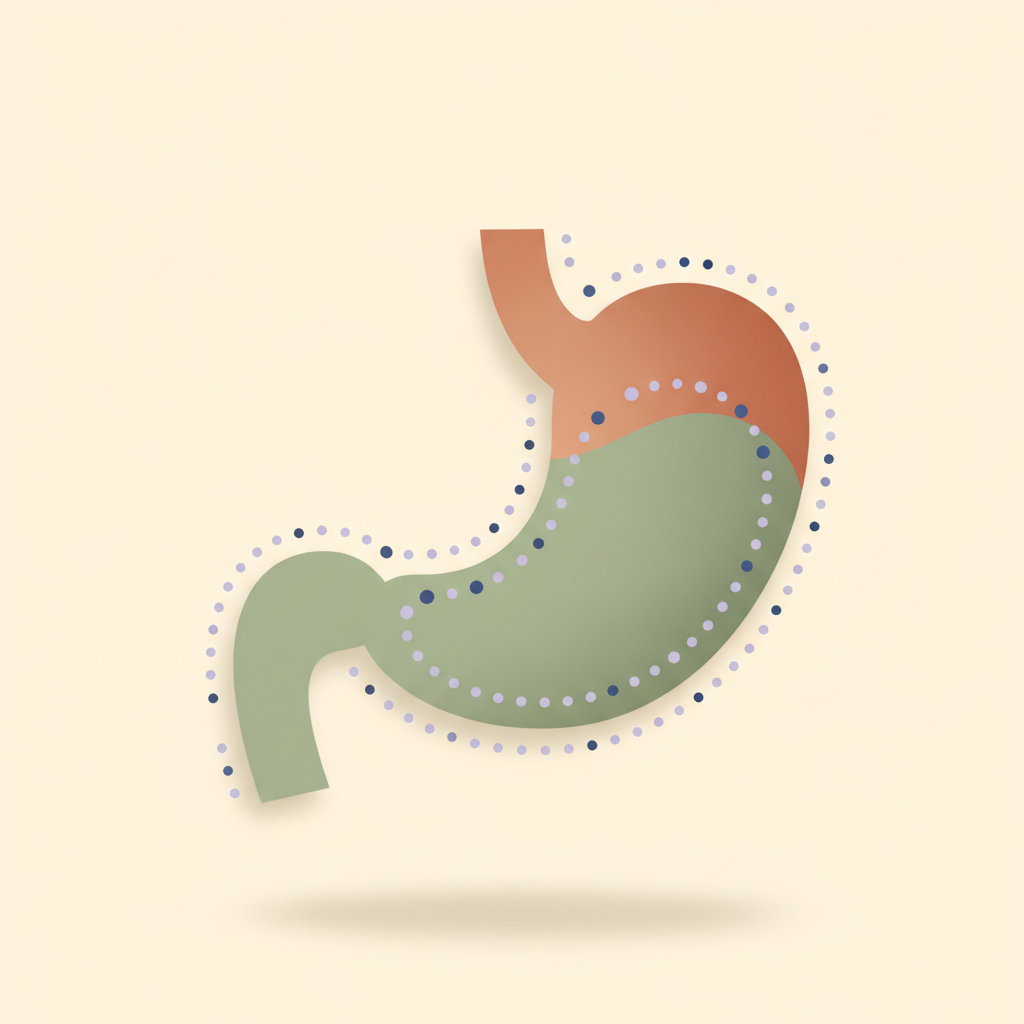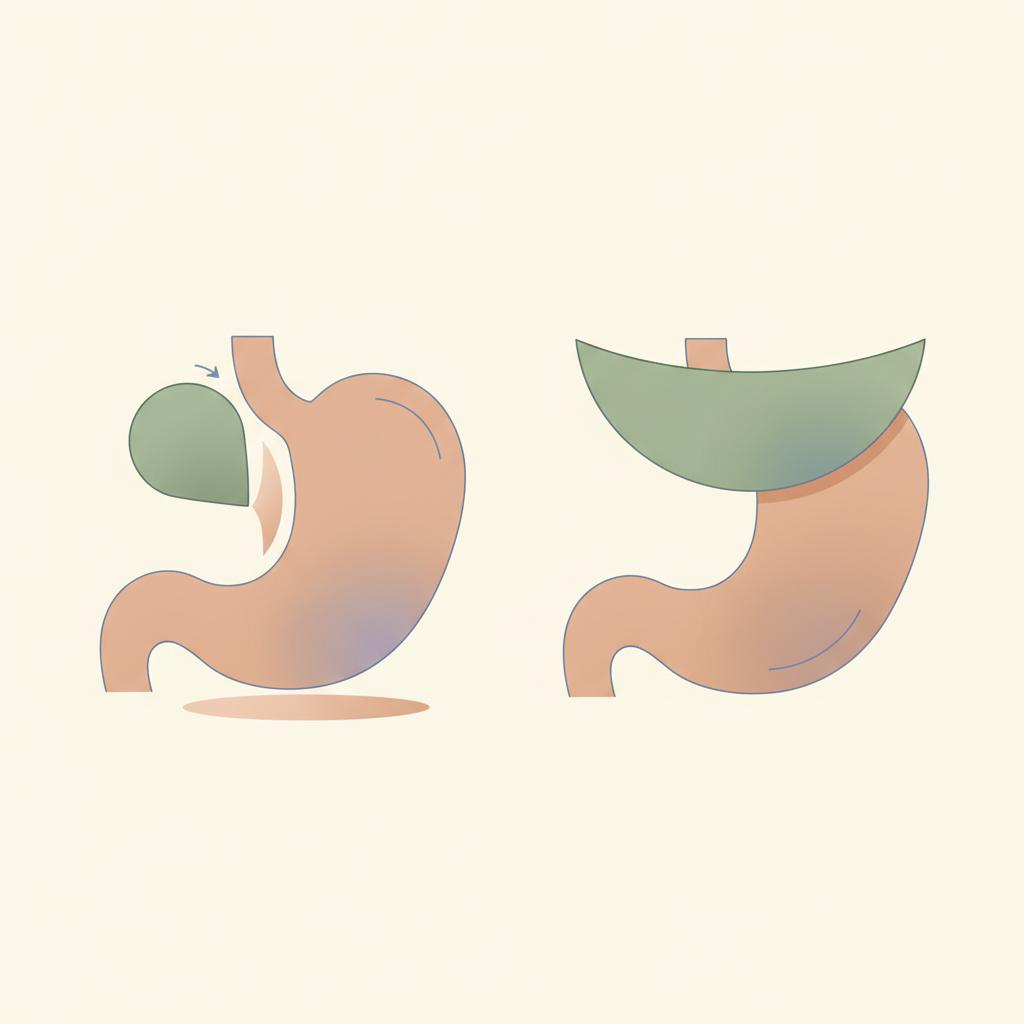
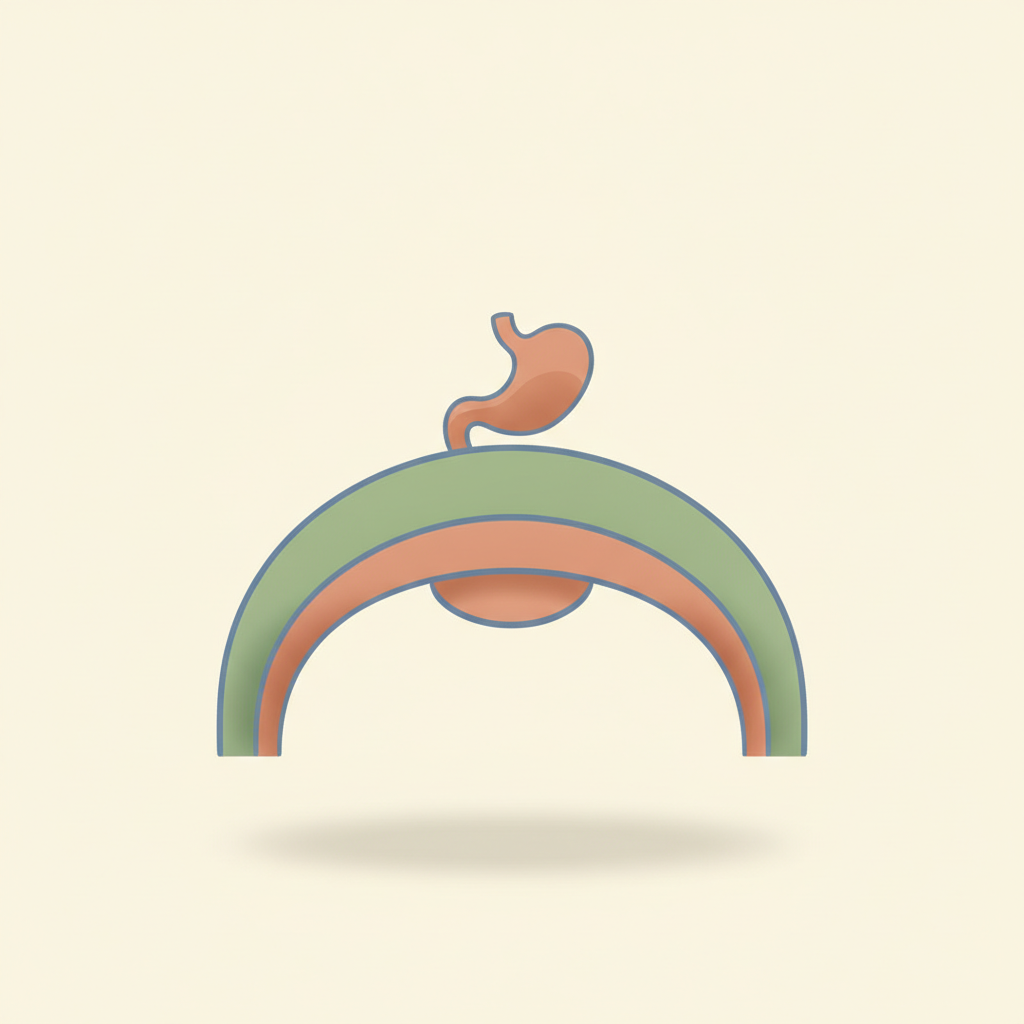
A hiatal hernia occurs when part of the stomach pushes up through the diaphragm — the muscle separating the chest and abdomen — into the chest cavity, through an opening called the hiatus that the esophagus normally passes through. This displacement matters for reflux because the diaphragm normally works alongside the LES to keep stomach contents down; when part of the stomach sits above it, that support is disrupted, making reflux more likely and often more severe. Small hiatal hernias are common, especially with age, and many people have one without ever knowing, since it doesn't always cause symptoms on its own. Larger hernias are more likely to cause noticeable reflux, along with occasional chest discomfort or a feeling of fullness. It's typically diagnosed via endoscopy or imaging done for another reason, or when investigating persistent reflux that isn't responding well to standard treatment.